








I once watched a woman at Charles de Gaulle airport pay €85 in excess baggage fees for a five-day trip. She had packed three pairs of heeled shoes “just in case” and two full-sized bottles of shampoo she could have bought at any pharmacy in Paris for €3.
I didn’t say anything. I just quietly re-zipped my 28-liter daypack and walked to the gate.
Packing is a skill. It takes practice, and it requires genuinely rethinking some habits that feel intuitive but aren’t. This guide is the result of years of trial, error, and the specific kind of wisdom that comes from dragging an overpacked suitcase up four flights of stairs in a Lisbon guest house at midnight.
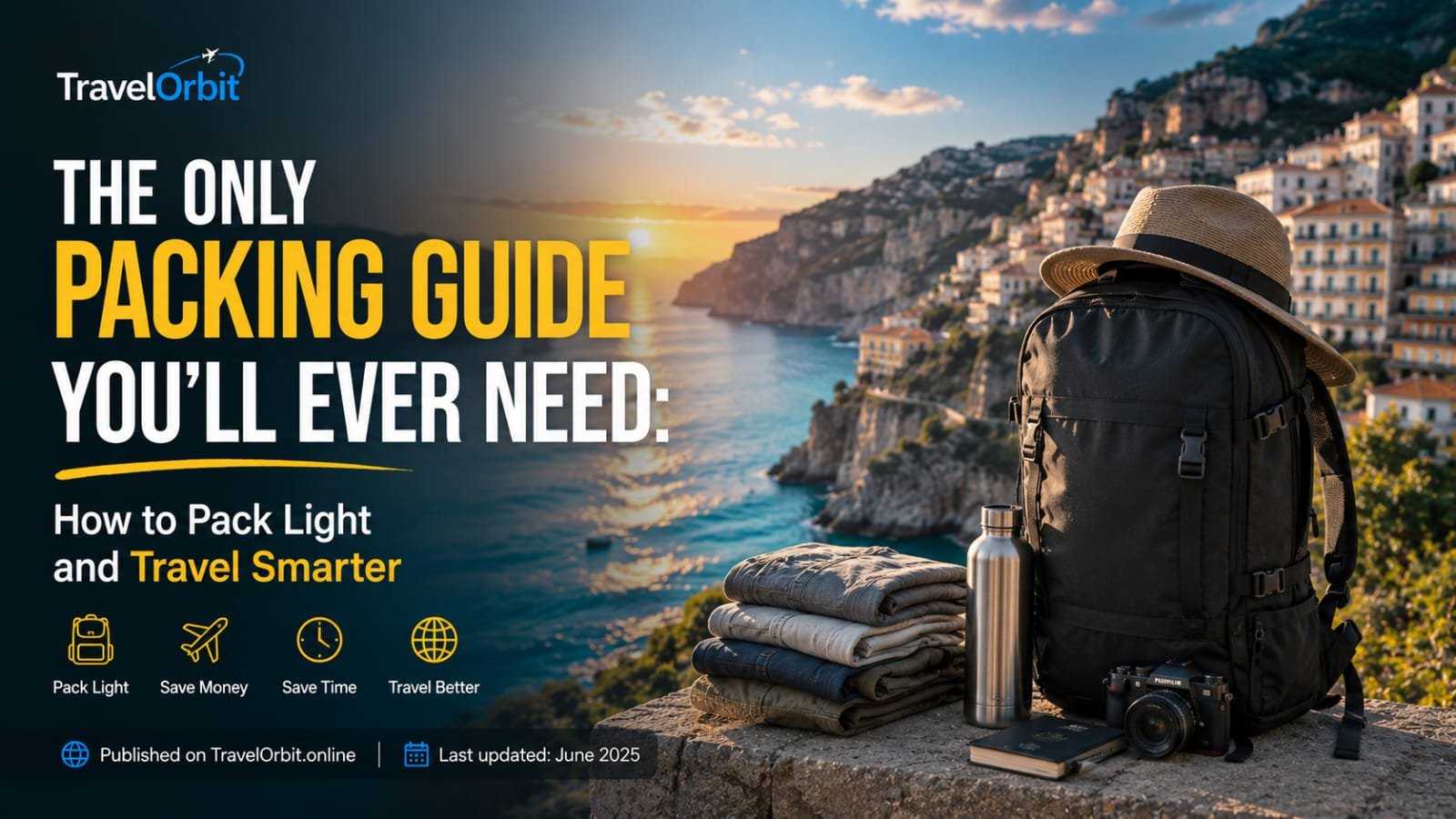
By the end of this article, you’ll know exactly what to pack, what to leave behind, and how to fit everything you need for two weeks into a carry-on. Every time.
Why Packing Light Changes Your Entire Travel Experience
Before we get into specifics, let’s talk about why this matters beyond just avoiding baggage fees.
When you travel light, you move differently. You can take the stairs instead of hunting for an elevator. You can hop on a local bus without anxiety. You can arrive at a hotel and walk to your room without a porter. You can change plans spontaneously — decide to stay another day somewhere, take a train you hadn’t booked — because you’re not anchored by luggage.
Heavy packing is fundamentally about fear: the fear of not having something you might need. Light packing is fundamentally about trust: trust that you can handle the unexpected, buy what you need, and that most of what you “just in case” packed won’t be needed.
That shift in mindset is the real work. The specific list below is secondary.
Part 1: Choosing the Right Bag
Carry-On vs. Checked Bag — The Honest Comparison
The case for carry-on only is compelling for trips under three weeks:
– No baggage fees (saves $30–$100+ per flight leg)
– No waiting at baggage carousels
– No lost luggage risk
– Faster movement through airports, train stations, and city streets
– Forces you to pack intentionally
The case for a checked bag:
– You need specialized gear (hiking boots, formal wear, scuba equipment)
– You’re traveling for more than three weeks without laundry access
– You’re traveling with children and genuinely need more supplies
For most leisure trips of two weeks or less, carry-on only is the right choice.
What Size Bag Do You Actually Need?
28–35 liters covers most trips of one to two weeks comfortably when you pack efficiently. This is the sweet spot for most airline carry-on size requirements.
40–45 liters gives more room and still meets many airline overhead bin requirements, though some budget carriers are stricter. Osprey Farpoint 40 and REI Flash 45 are consistently recommended in this category.
Personal item (15–20 liters) — a daypack or structured tote — carries your valuables, in-flight needs, and things you’ll want immediate access to: passport, laptop, snacks, headphones, book.
If you check nothing and use a 35L main bag plus a 15L personal item, you have roughly 50 liters total — genuinely enough for two weeks if you pack deliberately.
Part 2: The Master Packing List
This is not a comprehensive list of everything anyone might ever need. It’s what works for two weeks in most destinations, for most travelers. Adjust for your specific destination and activity type.
Clothing (The Capsule Wardrobe Approach)
The principle: everything must go with everything else, and everything must serve multiple purposes.
For a two-week trip pack:
– 3 to 4 tops (t-shirts or shirts in neutral, versatile colors)
– 1 to 2 long-sleeve layers
– 2 to 3 bottoms (trousers or shorts — at least one that works for both casual and slightly dressier occasions)
– 1 light jacket or packable down jacket
– 1 rain layer (packable, not bulky)
– 5 to 7 pairs of underwear (merino wool dries fast and resists odor)
– 3 to 4 pairs of socks (merino wool again)
– 1 pair of versatile shoes (the most important item — see below)
– 1 pair of sandals or flip-flops
– Workout gear or swimwear if relevant to your plans
**What you leave behind:**
– “Just in case” outfits for occasions that probably won’t happen
– More than one “nice” outfit (wear your nice outfit on the plane)
– Multiple pairs of shoes beyond two
The Shoe Problem
Shoes are the number one item that ruins light packing for most people. They’re heavy, they take up enormous volume, and most travelers pack three pairs when one well-chosen pair can do everything.
Choose one main shoe that:
– Can walk 15,000 steps without causing blisters
– Looks decent enough for a restaurant dinner
– Is versatile across weather conditions
All-black leather sneakers, well-broken-in Chelsea boots, or quality leather walking shoes hit this mark for most destinations. Dedicated hiking boots are only worth bringing if hiking is your primary activity — even then, some trails accommodate sturdy trail runners.
Toiletries — The Underestimated Space Saver
The biggest toiletry mistake: bringing full-sized products from home.
The rules:
– Decant everything into travel-sized containers (3.4oz/100ml for carry-on liquid limits)
– Bring only what you’ll use in the first two or three days — buy local products after that
– For trips over a week, shampoo and body wash are available in every pharmacy, grocery store, or convenience store worldwide
– Solid toiletries (shampoo bars, solid sunscreen, toothpaste tablets) eliminate the liquid limit entirely and take up far less space
What you actually need on day one:
– Toothbrush, toothpaste
– Deodorant
– Moisturizer/sunscreen (combined, ideally)
– Any prescription medications in original labeled containers
– Basic first aid: pain reliever, antihistamine, band-aids, blister plasters
That’s genuinely it. Everything else can wait until you’ve located a pharmacy.
### Electronics and Tech
This section tends to expand to fill whatever space is left in your bag. Resist it.
What most travelers actually use:
– Smartphone (camera, maps, translation, entertainment)
– Laptop or tablet (if genuinely needed for work or long flights)
– Universal travel adapter
– Power bank (10,000mAh covers most needs)
– Charging cables (bring one per device, consider a multi-port charger)
– Earbuds or headphones
What most travelers pack but rarely use:
– Dedicated cameras for non-photographer travelers (phones are excellent now)
– Multiple backup cables
– Devices that overlap in function (tablet AND laptop for a week-long leisure trip)
One practical tip: A multi-port USB-C charger (like Anker’s 65W GaN charger) replaces individual chargers for most modern devices and frees up one adapter plug entirely.
Part 3: Packing Techniques That Actually Make a Difference
The Packing Cube System
Packing cubes are the single most useful travel accessory after a good bag itself. They work by compressing clothing into organized units that stack neatly, allow you to find things without unpacking everything, and make airport security bag inspections take seconds instead of minutes.
How to set up your cube system:
– One cube for tops
– One cube for bottoms and layers
– One cube for underwear and socks
– One small pouch for cables and tech accessories
Compressible packing cubes (Eagle Creek, Osprey, and Peak Design make excellent versions) can reduce the volume of soft clothing by 30–40% through compression.
Roll vs. Fold vs. Bundle
The honest answer: rolling is better than folding for most items, and bundle wrapping (wrapping clothes around a central “core” item) is better than both for preventing wrinkles in nicer pieces. For practical trips without formal wear, rolling works fine. Roll t-shirts, underwear, and socks tightly. Fold structured items like trousers.
The One Week, Two Week Rule
For trips longer than one week, the answer isn’t more clothing — it’s laundry.
Most destinations worldwide have laundry facilities either at accommodation or nearby. A simple wash of essentials mid-trip means you can travel two weeks on one week’s worth of clothes. Services range from hostel washing machines to local laundry drop-off shops that wash and fold for $5–8 per bag.
Merino wool clothing is a cheat code here: it resists odor for multiple wearings and can be washed in a sink and dried overnight in most climates.
Part 4: What to Pack for Specific Trip Types
Beach and Warm Weather Packing
Warm destinations are the easiest to pack for — clothing is lightweight and compressible. Key considerations:
– Lightweight, quick-dry fabrics
– High SPF sunscreen (buy locally if traveling carry-on to avoid confiscation)
– Reef-safe sunscreen if visiting coral reef destinations — important for the environment, and now required by law in some locations
– Light layers for air-conditioned restaurants and transport (Southeast Asia is aggressively air-conditioned)
– Lightweight sandals that can handle both beach and city walking
Cold Weather and Winter Travel Packing
Winter packing is where the volume problem becomes acute. The solution is layering, not bulk:
Base layer: Merino wool thermal top and bottom — these compress remarkably well and can be worn under everything
Mid layer: A packable down jacket is the highest warmth-to-volume ratio item available
Outer layer: A waterproof shell rather than a bulky insulated jacket; the combination of base and mid layers provides warmth, the shell provides weather protection
This system outperforms a single heavy coat in both versatility and packing efficiency. The three layers take up less space than one large parka.
Hiking and Adventure Travel Packing
Hiking trips require the most specialized gear but often produce the lightest packs, because hikers learn necessity from experience.
The non-negotiables:
– Proper hiking footwear appropriate to trail difficulty (trail runners for moderate trails, boots for technical terrain)
– Moisture-wicking, quick-dry base layers
– Trekking poles if doing significant elevation gain (they reduce knee strain meaningfully)
– Blister prevention (body glide, quality hiking socks, already broken-in footwear)
– Rain gear that can pack down small
– Hydration system (collapsible water bottle or hydration bladder)
The most common mistake in adventure travel packing is bringing too much. Every extra kilo in a hiking pack is felt over a long day on trail.
Part 5: At the Airport — Making It All Work
Organizing for Security
Airport security is where a well-packed bag pays off most visibly.
– Keep your tech in one easily accessible pouch or the top layer of your bag
– Put liquids in the most accessible zip pocket
– Wear your heaviest/bulkiest items through security — jacket, boots if you have them
– Know TSA rules: liquids in 3.4oz or smaller containers, in one clear quart-sized bag
The Personal Item Strategy
Your personal item (the bag under the seat in front) should hold everything you need access to during the flight:
– Passport, boarding pass
– Wallet and phone
– Earbuds and phone charger
– Snacks
– Book or tablet
– Change of underwear and a toothbrush (in case your carry-on is gate-checked on a full flight)
This last point matters: on busy routes, gate agents sometimes require overhead bin bags to be checked. Having your genuine essentials in your personal item means this doesn’t become a crisis.
The Packing List Mindset Shift
The best packing advice I ever received was this: when you get home from a trip, immediately go through everything you packed and ask yourself honestly — did I use this?
After a few trips of doing this, patterns become clear. The “just in case” dress that stayed in the bag for two weeks. The three books when one would have done. The third pair of shoes.
Every experienced traveler carries a bit less on each subsequent trip. Not because they’re ascetics, but because they’ve learned what they actually need, and the freedom of moving lightly through the world is something you cannot unsee once you’ve experienced it.
Pack less. Travel better.
Explore more travel planning guides, destination tips, and smart travel resources at [TravelOrbit.online](https://travelorbit.online).
Tags: packing tips for travel, how to pack light, travel packing list, carry-on only travel, packing cubes, what to pack for vacation, minimalist travel packing, travel essentials, packing guide 2025, how to pack for two weeks in a carry-on