









Let me be upfront with you. I’ve read hundreds of budget travel articles that tell you to “skip your morning latte” or “just travel off-season” — and while those tips aren’t wrong, they don’t tell you how to actually make it happen. This article does.
I’ve been traveling on a tight budget for over six years, across four continents, and I want to share what genuinely moves the needle when you’re trying to see the world without emptying your bank account. No fluff. No filler. Just real, tested strategies.
Why Budget Travel Is More Achievable Than You Think
The biggest lie the travel industry sells you is that traveling well costs a fortune. It doesn’t. What costs a fortune is convenience — not choosing wisely in advance.
Budget travel doesn’t mean sleeping in dirty hostels or surviving on instant noodles (unless you want to). It means making smart choices that free up your money for the experiences that actually matter to you. Whether that’s a sunrise hike in Patagonia or a cooking class in Bangkok, budget travel is really about intentional spending, not deprivation.
According to recent travel data, the average American spends over $1,800 per international trip — but savvy budget travelers routinely cut that figure in half or more, without sacrificing a genuinely great experience.
Part 1: Before You Even Book Anything
1. Use Flexible Date Search Tools — Always
Google Flights’ “Explore” map is one of the most underrated free tools on the internet. Instead of locking in a destination and then searching for flights, flip the process: put in your departure airport, leave the destination open, and browse what’s cheapest over the next few months.
I found a $270 round-trip from Chicago to Lisbon this way — simply because I was flexible on whether I went in early October or mid-October.
Best tools for this:
– Google Flights Explore Map
– Skyscanner “Everywhere” search
– Hopper (for fare prediction)
2. Set Price Alerts and Actually Wait
This requires patience that most people don’t have — but it pays off. Set a price alert on Google Flights or Kayak for your target route, then wait. Flight prices fluctuate significantly even within a single week.
The sweet spot for booking international flights is generally 6–8 weeks in advance, though popular destinations during peak season may require earlier booking. Domestic flights tend to be cheapest 3–4 weeks out.
3. Never Pay for a Checked Bag If You Can Help It
Baggage fees have become one of the most significant hidden costs of air travel. Budget airlines in Europe (Ryanair, Wizz Air, EasyJet) and the Americas (Spirit, Frontier) are notorious for this.
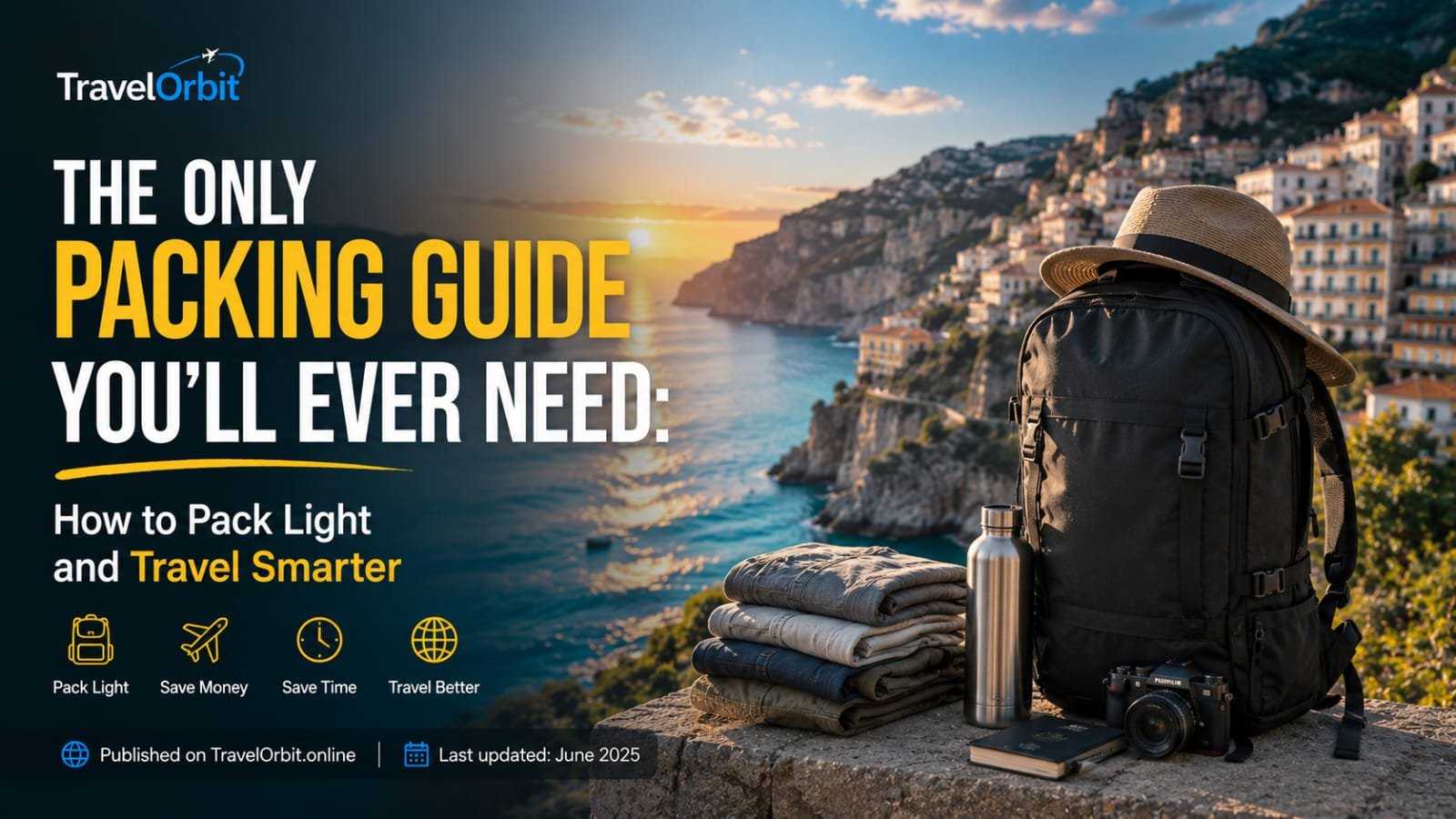
Pack everything into a carry-on. I know it sounds impossible for a three-week trip — but it isn’t. A 40L backpack like the Osprey Farpoint or the Away Carry-On fits into most overhead bins and keeps you completely free of baggage fees. You’ll also save time at the airport, which is a bonus you don’t appreciate until the third trip where you skip the bag carousel.
Part 2: Accommodation That Won’t Drain You
4. Don’t Default to Hotels
Hotels are the most expensive and often the least interesting way to sleep when you travel. Here are three alternatives that budget travelers swear by:
Hostels have completely reinvented themselves. Cities like Lisbon, Medellín, and Tokyo now have boutique hostels with private rooms that cost less than $40/night and feel like small design hotels. Sites like Hostelworld and Generator hostels are a good starting point.
Airbnb (long stays) if you’re staying somewhere for a week or more, Airbnb’s weekly discount kicks in and often makes it cheaper than a hotel. Plus, having a kitchen saves you enormously on food costs.
House-sitting via platforms like TrustedHousesitters lets you stay somewhere entirely for free in exchange for caring for someone’s home and pets. Thousands of travelers use this to live in Tuscany or Bali for weeks without paying a cent in accommodation.
5. Book Accommodation in the Right Part of Town
Location matters more than star ratings. A cheap hotel in a neighborhood that requires $15 Ubers everywhere will cost you more than a slightly pricier one right next to the transit hub. Before you book, pull up the address on Google Maps, check public transit routes, and see how walkable the area is.
6. Consider Overnight Buses and Trains
This is a trick that experienced budget travelers use constantly: book an overnight train or bus and you effectively get free accommodation while covering ground simultaneously. The sleeper trains across Eastern Europe, Southeast Asia, and India are legendary for being cheap, comfortable, and genuinely memorable travel experiences.
Part 3: Eating Well Without Overspending
7. Eat Where the Locals Eat
I know you’ve heard this before. But here’s the specific version that actually helps: look for restaurants with no English menu out front, laminated photos, or aggressive touts outside the door. These are tourist traps. Walk one or two streets back from the main square and food prices drop dramatically while quality often goes up.
In cities like Istanbul, Ho Chi Minh City, or Mexico City, you can eat like royalty for $3–5 per meal if you eat where workers, families, and students eat. Street food markets, local “set lunch” deals, and market stalls are your best friends.
8. Grocery Shop Like a Local
If you have access to a kitchen — even just a kettle and a small fridge — you can save a tremendous amount on breakfasts and lunches. Grab fresh produce, bread, local cheese, and fruit from a nearby market every couple of days. Then splash out on one really good dinner instead of three mediocre overpriced tourist meals.
9. Drink Tap Water Where It’s Safe
This sounds small, but bottled water expenses add up fast in hot countries. Download the **Tap** app or check online whether tap water in your destination is drinkable. In most of Western Europe, Japan, New Zealand, and Canada, tap water is perfectly safe and free. Use a filter bottle like LifeStraw for destinations where it’s not.
Part 4: Getting Around Without Burning Cash
10. Prioritize Countries with Strong Public Transit
Some destinations are naturally budget-friendly because of excellent public transportation. Japan’s train system, London’s Oyster card, Bangkok’s BTS Skytrain — these make it easy to cover enormous distances cheaply. Research before you go whether a city transit pass is worth buying for your stay.
11. Learn to Use Ride-Sharing Apps Locally
Uber and Lyft are dominant in the US, but globally, local apps are almost always cheaper. Grab in Southeast Asia, Bolt in Europe, inDrive in South America — these local apps undercut international competitors significantly. Download them before you need them so you’re not scrambling at the airport.
12. Walk More Than You Think You Need To
This is free, it keeps you fit, and it’s honestly how you discover the best things. Some of my most vivid travel memories happened because I was walking to somewhere else and stumbled into something unplanned. Budget travelers are accidentally better tourists for this reason.
Part 5: Activities and Experiences
13. Free Walking Tours Are a Gift
Almost every major city in the world now has a free walking tour operated by local guides who work on tips. They are typically excellent — guides are passionate, knowledgeable locals, not bored employees. Search “[city name] free walking tour” and you’ll almost always find one.
Not only is this a great way to orient yourself in a new place, it also gives you a local contact who can recommend everything from the best cheap eats to hidden bars that aren’t in any guidebook.
14. Museum Free Days and City Passes
Many cities offer free museum days — the first Sunday of the month at Paris’s Musée d’Orsay, for instance, or free admission at London’s British Museum every day. Research these before you go.
City passes (like the Vienna City Card or New York CityPASS) can save significant money if you plan to hit many paid attractions. But run the math — they’re only worth it if you’ll actually use them fully.
15. Travel Slower and Go Deeper
The more you rush from city to city, the more you spend. Every new destination costs money: transport, a new accommodation to settle into, tourist-area restaurants while you get your bearings. Budget travelers who stay somewhere for a week or more spend far less per day than those doing a new city every two nights.
Slower travel also means you actually experience a place rather than photographing it from the outside.
Part 6: Money and Finance
16. Never Use Your Bank’s Exchange Rate
ATM and card fees abroad can silently eat 3–6% of every transaction. That adds up fast over a long trip. Get a travel card with zero foreign transaction fees before you go.
Top options in 2026:
Wise card (excellent exchange rates, multi-currency)
Charles Schwab debit card (refunds ATM fees worldwide)
Revolut (free foreign withdrawals up to a monthly limit)
Set one of these up before you leave. It takes 10 minutes and will save you potentially hundreds of dollars on a long trip.
17. Track Your Spending From Day One
The reason most people blow their travel budget is simple: they stop paying attention after day two. Use a free app like **Trail Wallet or just a simple Notes spreadsheet to log every expense as it happens. When you can see exactly where the money is going, you make different decisions.
Budget travelers aren’t people who have more willpower — they’re people who have more information.
Final Thoughts: Budget Travel Is a Skill, Not a Sacrifice
The first time I traveled on a budget, I was nervous, underprepared, and occasionally uncomfortable. By the fifth time, I had systems, knowledge, and confidence — and I was having genuinely better trips than I’d had on more expensive vacations years earlier.
Budget travel teaches you to engage with a place more authentically. You eat where locals eat, stay in neighborhoods where tourists don’t always venture, and take the same bus that residents take. That closeness is something you can’t buy with a five-star hotel booking.
Start with one or two of these strategies on your next trip. The savings compound, the habits form, and before long, budget travel stops feeling like a compromise and starts feeling like the smarter, richer version of exploring the world.
Ready to start planning your next trip? Explore destination guides, flight deal alerts, and travel itineraries at [TravelOrbit.online](https://travelorbit.online).
Tags: budget travel tips, how to travel cheap, cheap travel hacks, save money traveling, backpacker tips, solo travel on a budget, affordable travel destinations, travel hacks 2026