






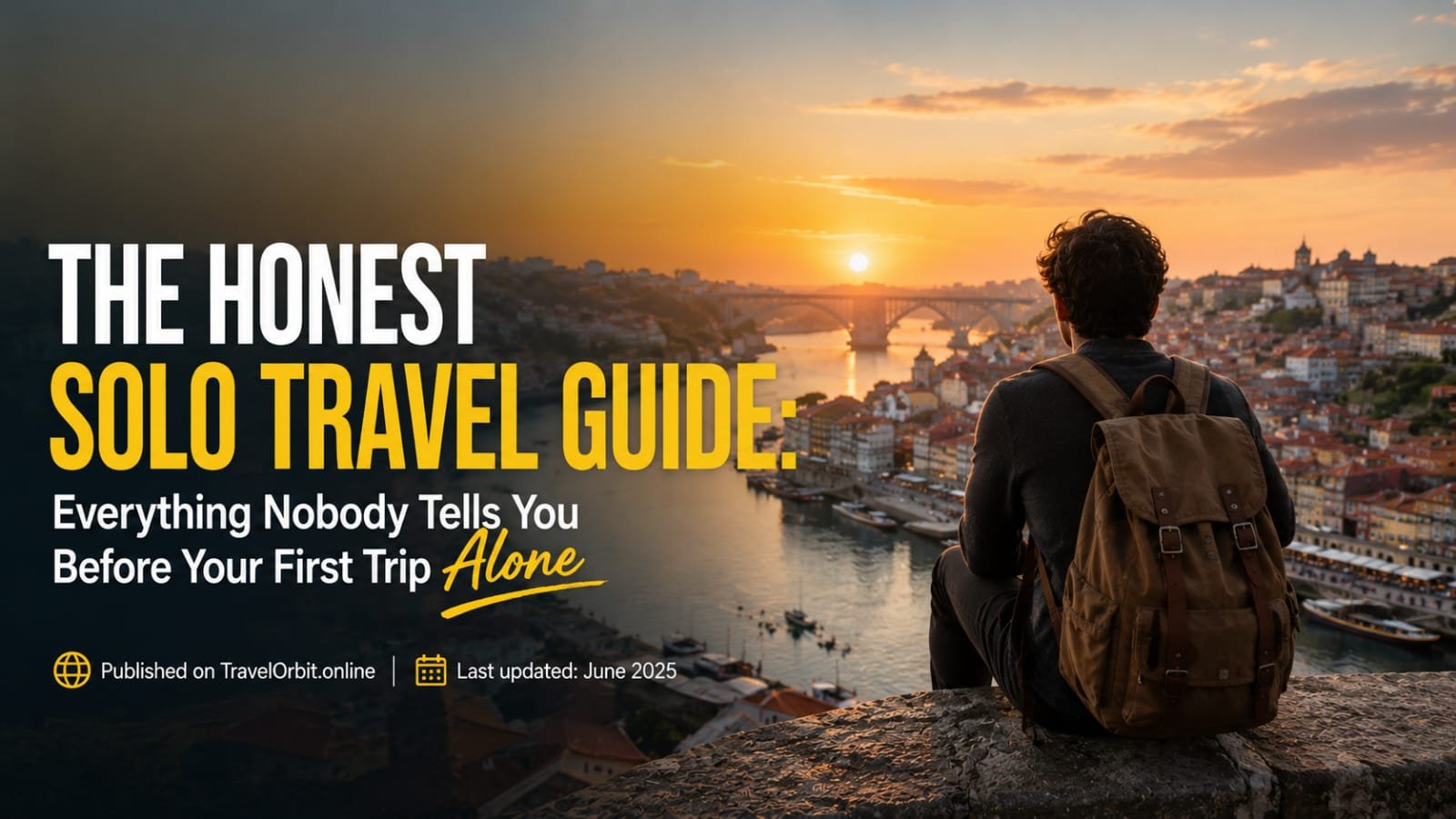
The first time I traveled alone, I sat in an airport gate in Dallas and genuinely considered turning back. Not because I was afraid of the destination — I was afraid of myself. Of being alone with my thoughts for two weeks. Of eating in restaurants solo. Of having no one to confirm that I was making the right choices.
That trip — a solo week in Porto, Portugal — ended up being one of the most quietly transformative experiences of my life.
I’m writing this guide for anyone standing in that same gate, figuratively or literally. Because the conversation around solo travel often swings between two extremes: reckless “just go for it!” enthusiasm and paralyzing fear-mongering. What you actually need is somewhere between those extremes — honest, practical information that respects your intelligence and your concerns.
Why More People Are Choosing to Travel Solo
Solo travel is no longer niche. In 2024, multiple travel industry surveys found that solo bookings had grown to represent over 20% of all travel — and the demographics are more diverse than the stereotype suggests. It’s not just young backpackers. It’s divorced parents on their first trip in years. It’s retirees finally doing the trip they always postponed. It’s professionals in their 30s who couldn’t find anyone to go with and decided to go anyway.
What’s driving this growth? A few things:
The pandemic shifted priorities. A lot of people decided they were done waiting for the right time or the right companion.
Social media made it feel possible. Seeing real people travel alone — not Instagram-perfect influencers, but regular humans — normalized it.
Remote work loosened schedules. When you can work from anywhere, the barrier to an extended trip drops significantly.
But beyond logistics, solo travel fills a specific need: the need to have an experience that is entirely yours. To make every choice based only on what you want. To be surprised by who you are when there’s no audience.
Part 1: Choosing Your First Solo Destination
Start Somewhere That Eases You In
Your first solo trip doesn’t need to be a test of your limits. There’s no bonus points for making it hard. Choose a destination where you can:
Communicate reasonably easily (English widely spoken, or you know some of the language)
Navigate public transit without too much stress
Feel safe and well-organized as a first-time solo traveler
Some of the most consistently recommended first solo destinations include:
Japan — safe, orderly, deeply fascinating, with excellent transit and a culture of leaving solo travelers completely unbothered. Eating alone in Japan is completely normal and well-accommodated (many restaurants have solo counter seating specifically designed for this).
Portugal — affordable, English widely spoken, extremely friendly locals, compact cities, incredible food. Lisbon and Porto are both excellent.
New Zealand — anglophone, spectacularly beautiful, strong backpacker infrastructure, very safe.
Thailand — Bangkok, Chiang Mai, and the islands are among the world’s most well-trodden solo travel routes, which means the infrastructure is excellent and you’ll be surrounded by other solo travelers almost immediately.
Questions to Ask Yourself Before Choosing
How comfortable am I being completely alone in an unfamiliar place for [X] days?
Do I want to encounter other solo travelers easily, or do I prefer quiet solitude?
What kind of experience do I actually want — adventure, cultural immersion, relaxation, or a mix?
What’s my budget, and does it open or close certain destinations?
There are no wrong answers, but being honest with yourself about these questions will save you from choosing a destination based on what sounds impressive versus what you’ll actually enjoy.
Part 2: Planning Your Solo Trip
How Much to Plan Versus Leave Open
This is one of the most common anxieties of first-time solo travelers: how rigidly should you plan?
Here’s the nuanced answer: plan your first two or three days in detail, and leave the rest flexible.
The first days in a new place are the most disorienting. You don’t yet know the rhythms of the city, where to eat, how to get around, or who you might meet. Having those days planned reduces the decision fatigue and the anxiety of arriving somewhere new and alone.
After that, flexibility becomes your greatest asset as a solo traveler. When you meet someone interesting who’s heading to a town you hadn’t considered, you can go. When you find a neighborhood you love, you can stay another day without anyone else’s schedule to consult. This is the superpower of traveling alone that no group trip can replicate.
The Non-Negotiable Preparations
Regardless of where you’re going, do these before you leave:
Make photocopies of important documents. Passport, travel insurance policy, vaccination records if applicable. Keep digital copies in Google Drive and physical copies separate from your originals.
Get travel insurance. This is non-negotiable for solo travelers. If something goes wrong — a medical emergency, a missed connection, a stolen bag — you are dealing with it alone. Insurance transforms a potential disaster into a manageable inconvenience. World Nomads and SafetyWing are popular options for international travelers.
Share your itinerary with someone you trust at home. Not because disaster is likely, but because the peace of mind it gives both you and them is worth the five minutes it takes.
Download offline maps. Google Maps works offline if you download the area in advance. This is invaluable when you’re in a place with patchy data signal and don’t want to be fumbling with your phone on a street corner.
Part 3: The Psychological Reality of Solo Travel
The First Night Can Be Hard
Let’s name this honestly because too many solo travel articles skip it: the first night alone in a new place is often the loneliest part. You’re tired from traveling, you’re in an unfamiliar space, and without someone to process the day with, there’s a particular quietness that can feel heavy.
This is normal. It passes. It almost always passes by day two, when you start finding your rhythm, when the city becomes slightly familiar, when you’ve had a good meal and some sleep.
If you find the first night difficult, resist the urge to call home for hours on end — this often amplifies rather than resolves the loneliness. Instead: take a shower, go out for dinner, walk around a bit, then sleep early. Day two is always better.
Loneliness Versus Solitude
There’s a distinction that experienced solo travelers make between loneliness and solitude, and learning to feel it is part of what makes solo travel valuable.
Loneliness is wanting connection and not having it. It’s real, and it happens in solo travel, particularly during meals or on long transit days.
Solitude is choosing to be alone and finding it rich and restoring. It’s sitting at a café with a coffee and a notebook and feeling, paradoxically, completely at ease with yourself.
Most solo trips oscillate between the two. Learning to sit with loneliness without panicking, and to recognize solitude as a gift rather than a failure, is one of the most valuable things solo travel teaches.
The Social Side of Solo Travel
Counterintuitively, solo travelers often end up more socially connected than those traveling in groups. When you’re part of a pair or group, you’re a closed social unit — others are less likely to approach you. When you’re alone, you’re an open invitation.
You’ll find that:
Hostel common rooms are genuinely social environments
Free walking tour groups are excellent for meeting people briefly
Sitting at a bar or counter seat starts conversations naturally
Day trips and guided tours throw you together with strangers in ways that often produce lasting connections
Many solo travelers report that the friends they make on the road become some of the most meaningful relationships in their lives — people they continue to travel with, or who visit them at home, for years afterward.
Part 4: Safety for Solo Travelers
The Honest Risk Assessment
Solo travel is not inherently dangerous. The vast majority of people who travel alone — including women traveling alone, which is a topic that deserves its own honest conversation — do so without serious incident. That’s the baseline truth, and it’s important to start there.
At the same time, being solo does mean being more responsible for your own safety, because there’s no companion to notice if something feels off.
General Safety Principles
Trust your instincts, but examine them. Your gut is often right — if something feels wrong, act on that. But also notice if your instinct is just anxiety about the unfamiliar, which is different.
Stay aware in crowded areas. Tourist districts, train stations, and markets are prime environments for pickpockets. Keep your bag in front of you, use inside pockets for valuables, and stay off your phone in dense crowds.
Let someone know where you’re going. When going somewhere new — a hike, an evening event, a night market — drop a quick text to a friend or family member with your location.
Alcohol and vulnerability. This applies everywhere: the biggest safety risk in solo travel isn’t crime, it’s reduced situational awareness from drinking too much alone in unfamiliar environments. Know your limits and stay within them.
Research LGBTQ+ safety if relevant. For LGBTQ+ travelers, the risk profile of different destinations varies dramatically. Research carefully, consult community-specific travel resources, and trust your assessment of each individual place.
For Women Traveling Alone
The honest answer is that solo female travel has specific considerations that deserve honest conversation rather than dismissal or catastrophizing.
Some destinations have higher rates of street harassment or require additional planning. Others — like Japan, Iceland, New Zealand, and Portugal — are widely considered very comfortable for women traveling alone.
Resources specifically curated for female solo travelers include the Solo Female Traveler Network and Wanderful community, both of which offer destination-specific safety information from the perspective of other women who’ve been there.
Part 5: Making the Most of Your Time Alone
Keep a Journal
I know this sounds like standard travel advice, but I mean it more specifically: write in it daily, even if just a few paragraphs. When you’re processing an entire day’s worth of experience without anyone to share it with, writing becomes the conversation you’re not having. It crystallizes what you’re feeling, fixes memories more vividly, and gives you something to return to years later.
Say Yes to Unexpected Invitations (Within Reason)
When a local café owner invites you to a neighborhood festival, or a fellow traveler suggests a detour you hadn’t planned — say yes more often than you’d think to. Some of the most memorable travel stories begin exactly this way.
“Within reason” means maintaining your common sense about safety and your own comfort. But the impulse to stick to your original plan is often just fear of the unfamiliar, not genuine caution.
Give Yourself Permission to Do Nothing
Solo travel gives you the freedom to sit in a beautiful plaza for two hours doing nothing particularly productive. To read a novel in a park. To watch the world go by from a café window without needing to justify it to anyone else.
This is not wasted time. This is actually one of the most underrated benefits of traveling alone — the permission to rest and absorb without agenda.
What Solo Travel Actually Changes
Here’s what people rarely say in solo travel articles, but what solo travelers often privately discover: the trip changes you less because of what happens and more because of what you learn about yourself.
You discover you’re more resourceful than you thought. You discover that being alone is sometimes lonely and sometimes profoundly peaceful. You discover what you actually find interesting versus what you thought you were supposed to find interesting.
You discover that you’re good company.
And that, more than any destination, more than any Instagram photo, is worth the price of the plane ticket.
Plan your solo adventure with destination guides, travel tips, and expert advice at TravelOrbit.online.
Tags: solo travel guide, traveling alone tips, first solo trip, solo female travel, solo travel safety, solo travel destinations, how to travel alone, solo backpacking, best countries for solo travel